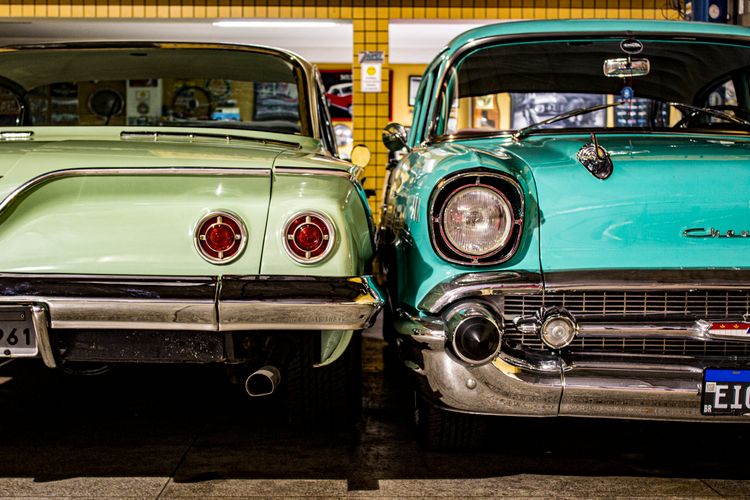

Every concours winner starts as somebody's problem. The car that rolls across the grass at Pebble Beach was, not long before, a stack of parts on a shop floor, and the distance between those two states is measured in patience, documentation, and a great deal of skilled labor.
What "frame-off" actually means
The term gets used loosely, so it's worth being precise. A true frame-off restoration means the body is separated from the chassis, and every system (drivetrain, suspension, brakes, wiring, interior, and finish) is disassembled, catalogued, restored or replaced, and reassembled to a known standard. Done properly, it is not a paint job with ambitions. It is the rebuilding of an entire car.
The first 200 hours are detective work
Before a single panel comes off, we photograph everything. Date codes, casting numbers, paint markings hidden under decades of overspray: these are the fingerprints that tell us whether a car is what its seller claims. For numbers-matching cars, this stage protects value. For honest drivers, it tells us how far to take the work.
Where the time goes
Metalwork and bodywork swallow the largest share of the budget on most projects. Rust never sleeps, and the difference between a car that looks straight in photos and one that is straight in person is hundreds of hours of patient panel fitting. Chrome, glass, and trim come back from specialist vendors. Mechanical rebuilds run in parallel.
What buyers should ask for
If you are shopping for a restored car, ask to see the file. A serious restoration generates a paper trail: receipts, before-and-after photography, and a log of what was done and by whom. That documentation is worth real money at resale, and its absence should make you cautious. A beautiful finish hides a great deal. The binder does not.
Have a project of your own? Our shop takes on a limited number of full restorations each year. Tell us about your car.